

Waking Up in a Fairytale: A Journey Through Cappadocia

Updated: May 4
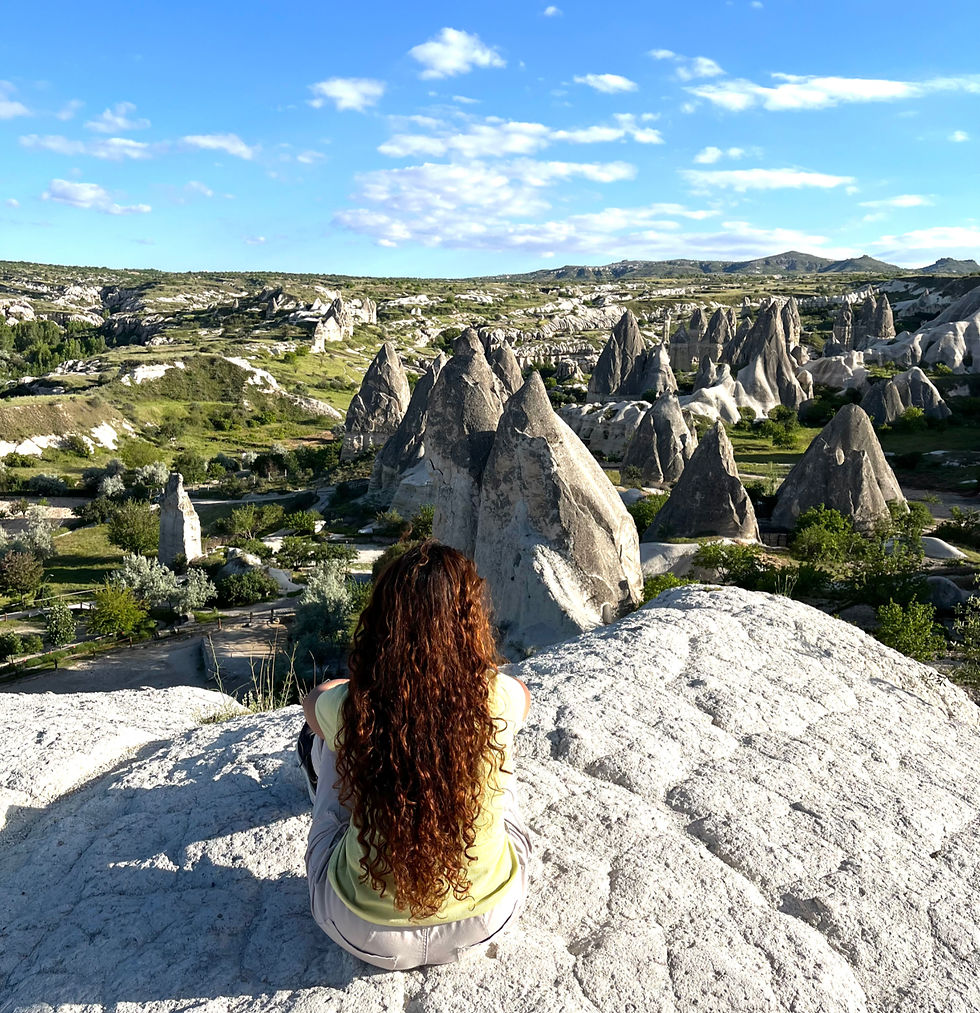
Located in Central Anatolia in Türkiye, Cappadocia is a semi-arid region known for its dramatic landscapes and deep-rooted history. Shaped by centuries of volcanic activity into cones, valleys, and caves, this part of the country feels like a scene from a fairytale. I often looked at pictures and reels of its breathtaking landscapes and the iconic hot-air balloon rides, dreaming of experiencing it myself. Finally, last year, we planned a family trip to Türkiye and decided to explore the magical land of Cappadocia.
Getting to Cappadocia
Cappadocia doesn't have a single city; it's a region centred around several towns, the main one being Göreme, which is where most visitors base themselves. The closest airports are Kayseri Erkilet Airport (ASR) and Nevşehir Kapadokya Airport (NAV), both of which receive domestic flights from Istanbul and Ankara. Flying from Istanbul takes about 1.5 hours and is the most common approach for international visitors.
From the airport, your accommodation will typically arrange a transfer, or you can book a shuttle service. Most cave hotels in Göreme are very helpful with logistics, just ask in advance.
Getting Around Cappadocia
Cappadocia's main attractions are spread across a large region, so transport planning matters.
Guided tours (Red Tour and Green Tour): the most practical way to cover the highlights.
Rental car or ATV: great for independent explorers who want flexibility. Roads are good between major sites.
Local minibuses: run between Göreme, Avanos, Ürgüp, and Uçhisar. Affordable but infrequent.
Taxis: available in Göreme and useful for shorter trips.
For first-time visitors, I'd strongly recommend doing both the Red and Green tours. They cover the most significant sites efficiently, come with an English-speaking guide, and save you the hassle of figuring out transport between distant sites yourself.
When to Visit
April to June: ideal. Mild temperatures, blooming landscapes, fewer crowds than summer. The hot air balloons operate year-round weather permitting, but spring offers the best combination of good weather and comfortable sightseeing temperatures
September to October: also excellent for similar reasons
July to August: peak tourist season, hot (30°C+), and busy, but the region handles crowds well and the balloon season is in full swing
December to February: Cappadocia in snow is breathtaking and feels even more otherworldly. Cold (can drop below freezing) but magical. Balloon flights may be cancelled more frequently due to wind.
How Many Days Do You Need?
Three to four days is ideal. This gives you time to do the balloon ride, the Red Tour, the Green Tour, and still have a free evening or two to wander Göreme and visit Lover's Hill at sunset. We spent three full days and felt we'd seen the highlights without rushing, though I could easily have stayed longer.
A Stay Like No Other: Inside a Cave Hotel
Cappadocia is famous for its cave hotels, which date back to centuries of human habitation in the region. In modern times, many of these ancient dwellings have been transformed into hotels, offering visitors a truly unique experience.
We checked into our hotel, Center Cave House (previously Cappadocia Cave Rooms), in Göreme, excited to finally stay in a real cave hotel. Our room was small but cozy, with naturally cool cave walls that added to the charm. The room, the delicious breakfast served each morning, and the presence of adorable cats all came together to make our stay truly memorable.
The Iconic Fairy Chimneys of Cappadocia
One evening, we went to Lover’s Hill, which was a short, 15-minute hike from our hotel. The hill is surrounded by stunning panoramic views – on one side, you get an aerial view of the entire town of Göreme, and on the other side, you see the Love Valley, which is famous for its unique rock formations, called ‘fairy chimneys’. The Lover’s Hill is a popular sunrise and sunset spot, attracting more people in the mornings, who want to watch the hot air balloons soaring above.
As we wandered around the hilltop, we took in the natural beauty that surrounded us. The view of Love Valley, with its whimsical fairy chimneys, was absolutely breathtaking — so enchanting, it felt like we had stepped into a real-life fairytale.
The Hot Air Balloon Experience
The thing we looked forward to the most during this trip was the hot-air balloon ride. When we arrived in Cappadocia, we found out that all balloon rides had been cancelled that morning due to strong winds. Since ours was scheduled for the next day, we were a bit worried. Thankfully, by evening, the balloon company confirmed our flight, and we were thrilled for the adventure ahead. We were picked up from our hotel at 4:30 a.m. and taken to the take-off site. As the crew prepared the balloon, we stood watching other balloons take off — a truly magical sight! It was 5 degrees Celsius and bundled up in layers, we eagerly waited for our turn.
Once the balloon was ready, the crew helped us climb in. The pilot gave us safety instructions, and soon we began to soar! Floating above the fairy chimneys was nothing short of magical. Because rides had been cancelled the day before, there were even more balloons in the sky that morning. The colourful balloons drifting across the sunrise-lit sky created a breathtaking view. As we glided past the cave hotels, we saw people waving up at us, taking pictures, and enjoying the moment just as much as we were.
After about an hour in the sky, we touched down gently. The crew handed us our flight certificates, and we celebrated the experience with non-alcoholic champagne! If you ever plan to visit Cappadocia, the hot-air balloon ride is an absolute must.
Practical tips for the balloon ride:
Book in advance: Reputable companies like Butterfly Balloons, Royal Balloon, and Kapadokya Balloons fill up fast, especially in peak season
Cost: Expect to pay around €150–250 per person for a standard 1-hour flight. Prices vary by company and season
Cancellations: Flights are cancelled due to wind regularly — this is completely normal and for safety. Most companies will reschedule you or offer a refund. Book early in your trip to give yourself the best chance of a rescheduled slot if needed
Dress warmly: Even in summer, the early morning temperatures at altitude are cold. Layers are essential
Wear comfortable shoes: You'll be standing for the duration of the flight.
From Underground Cities to Open-Air Wonders
Since the major sites in Cappadocia are spread across the region, the best way to explore is by joining a guided tour. Tour companies offer two main options: the Red Tour, covering the highlights of northern Cappadocia, and the Green Tour, focusing on the south. Both run daily and typically last a full day, including lunch.
The Red Tour: Northern Cappadocia
After finishing our hot-air balloon ride, we joined the Red Tour to explore the northern part of Cappadocia. The tour began with a visit to the Göreme Open Air Museum—a UNESCO World Heritage Site home to a complex of over 300 rock-cut churches, chapels, and monasteries. Our next stop was Paşabağı, also known as Monks Valley. The name comes from the monks who once lived in the caves and carved churches and monasteries into the fairy chimneys. Like the Göreme Open Air Museum, Paşabağı is also home to several historic religious structures.
Next, we visited the Zelve Open Air Museum, where three valleys filled with cave dwellings and churches converge. These valleys were inhabited until 1952, when they were deemed unsafe and the villagers were relocated a few kilometres away. We walked through the valley, exploring the cave rooms and admiring the stunning terrain. After that, we headed to Devrent Valley, also known as Imagination Valley. This valley is famous for its unusual rock formations that resemble animals and various objects—hence the name.
The final stop was Uchisar Castle, one of Cappadocia’s most iconic landmarks—and my favourite part of the Red Tour. Unlike a traditional castle, Uchisar is a massive rock-cut structure. While we didn’t climb to the top, we explored the caves at ground level. Some of these caves have lookout windows that offer breathtaking views of the surrounding landscape.
The Green Tour: Southern Cappadocia and Derinkuyu
The following day we did the Green Tour, covering the highlights of southern Cappadocia.
We started at Pigeon Valley, named after the countless man-made pigeon houses carved into the volcanic rock. These nests, created centuries ago, still host many species of pigeons today.
Next, we visited Ihlara Valley, a 15 km gorge formed by ancient volcanic activity. The valley is home to around 50 rock-carved churches and numerous other structures. We hiked down into the gorge just in time for lunch, where we enjoyed local delicacies by the flowing stream, accompanied by the company of a few curious cats hoping for a bite.
The best part of the tour was the final destination: Derinkuyu, an ancient multi-level underground city that extends approximately 85 metres deep. It was used extensively as a refuge during the Arab-Byzantine wars. Derinkuyu is the largest excavated underground city in Türkiye and once sheltered up to 20,000 people along with their livestock and food supplies. We explored its narrow, low-ceilinged hallways, forced to move single file, crouched over, as we made our way through the maze-like corridors. Claustrophobia started to set in, and it made us truly wonder what life must have been like for those who once lived underground for weeks or even months at a time.
A Sunset to Remember
On our last evening, we returned to Lover’s Hill. This time, we wandered to the quieter side of the hill, where there was no one else, and we had the entire view to ourselves. After a leisurely stroll, we settled down, taking in the peaceful atmosphere. Out of nowhere, a cute little dog appeared—with the biggest smile—and instantly warmed our hearts.
Soon, the sky began to change colours, blending soft hues of orange and pink, while the town below lit up with twinkling lights. We had front-row seats to the dreamiest view imaginable. As we watched the sun set over Cappadocia, I felt a deep sense of calm and contentment. It was the perfect end to a truly magical trip.
Final Thoughts
Cappadocia is unlike anywhere else on earth. It doesn't look like a real place, and then you arrive and discover it's even more extraordinary in person. The balloon ride, the underground city, the cave hotel breakfast, the fairy chimneys at sunset, each experience on its own would be memorable. Together, they add up to something genuinely unforgettable.
If Cappadocia is on your bucket list, stop waiting. Go.
Have questions about planning your Cappadocia trip? Leave a comment below — I'm happy to help!


Comments